Birla Mill Project
Birla Mill Project
The History of Birla Cotton Mills, Kamla Nagar — and the Story Behind Elevate Kamla Nagar
The Birla Mill project is the redevelopment of the former Birla Cotton Mills site in Kamla Nagar, North Delhi, into Elevate Kamla Nagar — a residential-led mixed-use development by Conscient Infrastructure and Hines, with Texmaco Infrastructure & Holdings (Adventz Group) as land partner and HDFC Capital as investment partner.
For most of the twentieth century, this stretch of land beside the old Grand Trunk Road was defined by the sound of spindles and looms. Thousands of North Delhi families earned their living here, and many Kamla Nagar residents still call the site simply “Birla Mill”. This article traces that history: how the mill shaped the neighbourhood, why it closed, and how the same land is now being planned for its next chapter.
Birla Mill Project at a Glance
|
Former use |
Birla Cotton Spinning and Weaving Mills (later Birla Textile Mills) |
|
Location |
Kamla Nagar, North Delhi, near Ghanta Ghar (Ram Swarup Clock Tower) |
|
Landholding |
Held by the Adventz Group (Texmaco) for more than 100 years |
|
Mill closure |
1996, during the Supreme Court’s relocation of large industries from Delhi |
|
New project |
Elevate Kamla Nagar (Conscient Hines Elevate Kamla Nagar) |
|
Partners |
Conscient, Hines, Texmaco (Adventz Group), HDFC Capital |
|
Metro |
Planned Ghanta Ghar station, Delhi Metro Phase 4 (Magenta Line), about 100 m away |
|
RERA status |
Application under process with Delhi RERA; not yet registered |
A Mill That Shaped a Neighbourhood
Kamla Nagar did not begin as a shopping district. Its early growth was tied to industry. The area rose to prominence with the Jaipuria and Birla textile mills and the Ram Swarup Clock Tower, built on the Grand Trunk Road in 1941 — the landmark locals know as Ghanta Ghar. The Delhi tram service once stopped here, carrying workers and traders between the mills and the old city.
The Birla Cotton Spinning and Weaving Mills, later operating as Birla Textile Mills, was one of the major employers in this part of Delhi. Its imprint survives in small ways: the postal locality “Birla Lines, Kamla Nagar” still appears in addresses, a reminder of the worker housing that grew up around the mill.
In the 1950s, the land around the mills was developed into a planned residential colony named after Kamala Nehru, freedom fighter and wife of India’s first Prime Minister. Laid out in blocks around roundabouts, with a mix of bungalows and apartment buildings, Kamla Nagar grew into a residential and later commercial hub, while the mill compound remained its industrial anchor.
Labour, Politics and Everyday Life
The mill was more than an economic engine; it was also a centre of civic life. Kamla Nagar and its neighbouring areas were politically active during the late colonial period and the early decades after Independence. Labour leader Guru Radha Kishan held a 24-day fast in Kamla Nagar in support of the rights of textile mill unions, and in 1953 representatives of Delhi’s Textile Labour Union took their concerns directly to Prime Minister Jawaharlal Nehru.
For many families, the mill meant a steady wage, a home in the worker lines and a community built around shift timings and festivals celebrated together. That shared memory is a large part of why the site still carries emotional weight in North Delhi.
1996: The Year the Looms Fell Silent
By the 1990s, Delhi had grown around its old industrial belts. Concerns about pollution and land use in dense residential areas were before the Supreme Court in the long-running M.C. Mehta v. Union of India case (Writ Petition 4677 of 1985), under which the Court oversaw the shifting of heavy and large industries out of the city, including several textile mills.
Birla Textiles was among them. In July 1996, the Court was told that alternate land had been identified in Himachal Pradesh. By December 1996, the Court recorded that the company had decided not to relocate the Delhi unit and that about 2,800 workmen would be retrenched, and it found the proposed compensation to be on the lower side. Later labour-court records describe the mill as closed since 1996, with the textile operation shifting to Baddi in Himachal Pradesh.
The land itself stayed with the group that had held it for more than a century, today represented by Texmaco Infrastructure & Holdings of the Adventz Group. For nearly three decades, the compound stood largely quiet behind its walls.
Why This Land Matters Now
Large, contiguous land parcels are rare inside Delhi’s established neighbourhoods. Most new homes in the capital are built on small plots or through the rebuilding of individual houses. A single site of about 10 acres, set within a mature neighbourhood, is uncommon.
Location adds to that. The site sits close to Delhi University’s North Campus, the Kamla Nehru Ridge, the historic Roshanara Bagh and Civil Lines. It is also about 100 metres from the planned Ghanta Ghar station on the Magenta Line extension under Delhi Metro Phase 4 — a link that would put the old mill neighbourhood on a new rapid-transit corridor.
From Birla Mill to Elevate Kamla Nagar
In early 2025, it was reported that Texmaco had partnered with Hines, Conscient and HDFC Capital to redevelop the former mill land. Hines then formally announced the development as its entry into Delhi’s residential market: a residential-led scheme of about 3 million square feet of condominium residences and modern retail on the former Birla Cotton Mills site. The four partners bring distinct roles:
- •
Conscient Infrastructure — lead developer, with an established track record in Delhi NCR.
- • Hines — co-developer; the Houston-headquartered international real estate firm, whose India business is led by Amit Diwan.
- • Texmaco Infrastructure & Holdings (Adventz Group) — land partner and owner of the site for more than 100 years.
- • HDFC Capital — investment partner, the real estate private equity arm of the HDFC Group.
Conscient and Hines have worked together before: their joint venture developed Elevate in Sector 59, Gurugram, announced in 2019. The Kamla Nagar project brings that partnership into Delhi, on a site with a far longer story.
What Is Being Planned on the Site
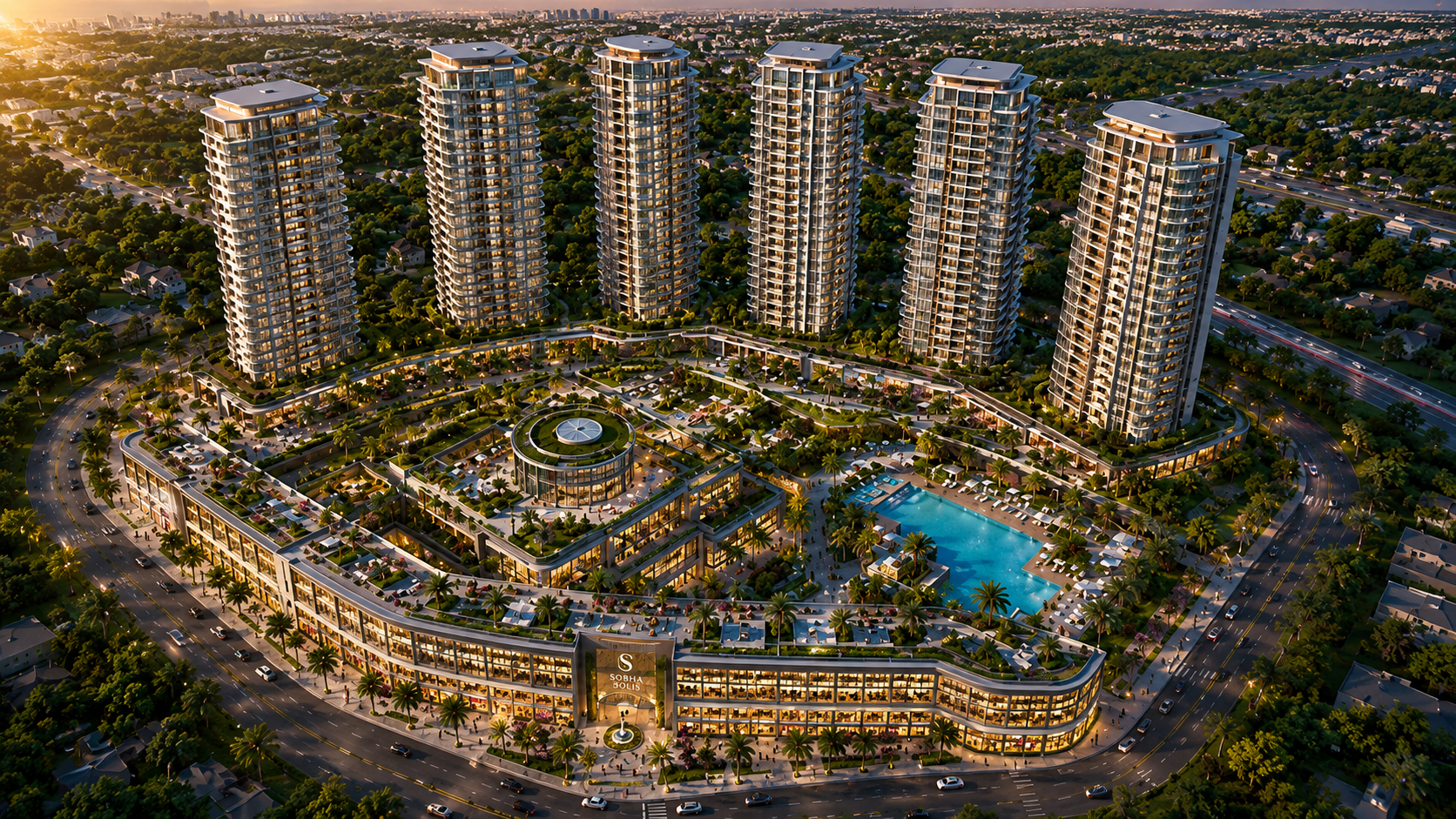
The published plan envisions six residential towers, a large clubhouse, landscaped open spaces and a street-facing commercial frontage, next to an adjoining DDA park. The partners describe the intent as blending the site’s heritage with contemporary urban living — replacing a walled industrial compound with homes, retail and open space that reconnect with the neighbourhood around it.
Detailed specifications, configurations and commercial terms are not published here. They will be shared through official channels only after the project is registered with the Delhi Real Estate Regulatory Authority.
Where the Project Stands Today
As of September 2026, the RERA application for Elevate Kamla Nagar is under process with Delhi RERA. Under Section 3 of the Real Estate (Regulation and Development) Act, 2016, a promoter cannot advertise, market, book or sell units in a project before it is registered. That is why this article carries no prices, unit sizes, payment plans or booking details.
If you are following the Birla Mill project, three steps help: check the Delhi RERA website for the registration number once it is issued; rely on the official project website and verified developer communication; and treat any third-party listing quoting prices or collecting “expressions of interest” before registration with caution.
Frequently Asked Questions
What is the Birla Mill project in Kamla Nagar?
It is the redevelopment of the former Birla Cotton Mills land in Kamla Nagar, North Delhi, into Elevate Kamla Nagar — a residential-led mixed-use development by Conscient and Hines, with Texmaco (Adventz Group) as land partner and HDFC Capital as investment partner.
When did Birla Mill in Kamla Nagar close?
Operations at the Kamla Nagar mill ended in 1996, during the Supreme Court’s process of shifting large industries out of Delhi under the M.C. Mehta case. Court records describe the mill as closed since 1996.
Who owns the Birla Mill land?
The land has been held for more than a century by the group now represented by Texmaco Infrastructure & Holdings, part of the Adventz Group, which is the land partner in the redevelopment.
Is Elevate Kamla Nagar RERA registered?
Not yet. The application is under process with Delhi RERA. Pricing, configurations and booking details will be published only after registration.
Which metro station is closest to the Birla Mill site?
The planned Ghanta Ghar station on the Magenta Line extension under Delhi Metro Phase 4 is about 100 metres from the site.
A Century of Continuity
From looms to living spaces, the Birla Mill land has always been about people — the workers, the families and the neighbourhood that grew around it. Its next chapter, Elevate Kamla Nagar, is still being written. This page will be updated as official milestones, including RERA registration, are announced.
Disclaimer: This article provides general information about the history of the Birla Cotton Mills site and the current status of the Elevate Kamla Nagar development. It is not an advertisement, offer or invitation to purchase. The project is awaiting registration with Delhi RERA. Historical details are drawn from public court records and published reports.